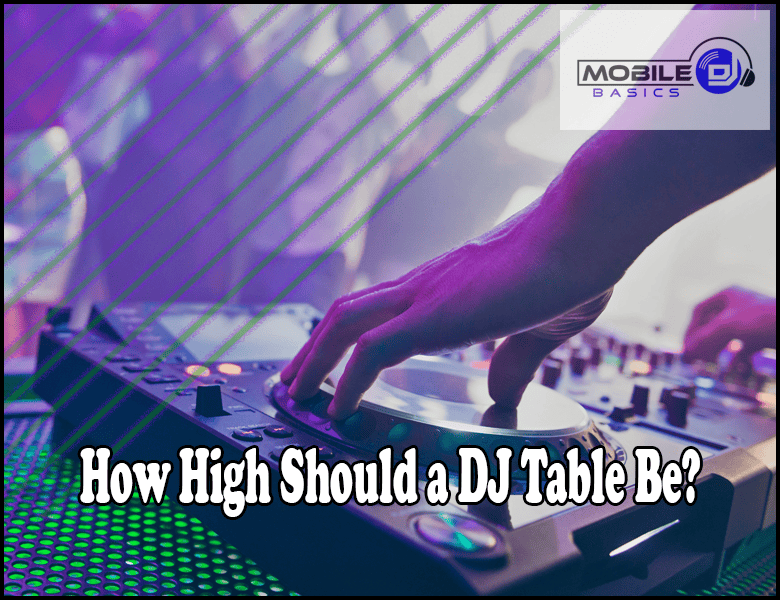
How High Should A DJ Table Be depends on your height, equipment setup, and performance style. The standard DJ booth height ranges from 42 to 46 inches, but finding your personal sweet spot makes all the difference for comfortable mixing sessions.
Most professional venues use adjustable setups because DJs come in different heights and have varying equipment needs. Getting the height wrong leads to back pain, poor posture, and less precise control over your gear during long sets.
TL;DR
- Standard DJ table height ranges from 42-46 inches, with 44 inches being the most common professional setup.
- Your elbow should bend at 90 degrees when your hands rest on the mixer for optimal ergonomics.
- Standing DJs need tables 6-8 inches higher than sitting DJs for the same comfort level.
- Adjustable legs or risers let you fine-tune height in 1-2 inch increments for perfect positioning.
How High Should A DJ Table Be for Different Heights
Your height determines your ideal table setup more than any other factor. A 6-foot DJ needs a different configuration than someone who’s 5’4″, and the math is pretty straightforward once you know the baseline.
Here’s the height breakdown for standing DJs:
- 5’4″ to 5’7″ – 42 to 43 inches works best for most equipment setups
- 5’8″ to 6’0″ – 44 to 45 inches provides comfortable reach and control
- 6’1″ to 6’4″ – 46 to 47 inches prevents hunching over your gear
- Over 6’4″ – 48+ inches or custom risers become necessary
The key test is your elbow position when your hands rest naturally on your mixer. Your elbows should bend at roughly 90 degrees without lifting your shoulders or slouching forward.
Standing vs Sitting DJ Setups
Standing DJs dominate the mobile scene because it creates better crowd connection and easier movement around equipment. Most mobile DJs bring their own tables to ensure proper height regardless of venue constraints.
Sitting setups work well for long radio shows or studio sessions where comfort over several hours matters more than crowd interaction. Sitting DJs typically use tables around 36-40 inches high with a quality chair that supports good posture.
Club vs Mobile Requirements
Club booths stick to industry standards because multiple DJs use the same setup throughout the night. Most clubs build their booths at 44-45 inches to accommodate the average DJ height range without major adjustments.
Mobile DJs have more flexibility since they control their entire setup. This freedom lets you optimize for your specific height, equipment configuration, and performance style without compromise.
Equipment Impact on Table Height
Your gear stack affects the final working height even when your table base stays the same. A thick mixer sits higher than a slim controller, and adding risers or stands changes everything.
Consider these equipment factors:
- Mixer thickness – Professional mixers add 2-4 inches compared to basic controllers
- Turntable height – Standard turntables sit about 6 inches tall including feet
- Laptop stands – Angled laptop risers can add 3-6 inches to your workspace
- Monitor placement – Desktop monitors need clearance above your main gear
Measure your complete setup before choosing a table height. The top of your most-used controls should hit that optimal elbow angle we discussed earlier.
Test Before You Buy
Stack some books or boxes to your target height and practice mixing for 30 minutes. This simple test reveals comfort issues before you invest in equipment.
Adjustable Solutions for Perfect Positioning
Adjustable table legs solve height problems for DJs who work different venues or share equipment with others. Quality adjustable legs move in 1-2 inch increments across a 6-8 inch range.
Popular adjustment methods include:
- Telescoping legs. Spring-loaded pins lock into preset holes for quick changes.
- Threaded adjusters. Fine-tune height by rotating leg extensions up or down.
- Modular risers. Stack platforms under your existing table for permanent height increases.
- Hydraulic systems. Professional setups with smooth electric height adjustment.
Investment in adjustable hardware pays off quickly when you consider the back pain and performance issues that come from wrong-height setups. Most mobile DJs find that getting the ergonomics right improves their mixing accuracy and reduces fatigue during long events.
Venue Considerations and Portability
Different venues create unique height challenges that mobile DJs must navigate. Wedding venues might provide cocktail tables that sit too low, while some clubs have permanent booths that can’t be modified.
Smart mobile DJs plan for these situations by bringing height adjustment tools. Stackable risers, adjustable legs, or even sturdy platforms let you adapt to any venue setup without compromising your comfort or performance quality.
Remember that mobile DJs handle much more than just music during events, so your table height affects everything from microphone adjustments to lighting control. Getting this basic setup element right makes every other aspect of your performance easier to manage.
Frequently Asked Questions
What height should a DJ table be for someone who is 5’10”?
A DJ who is 5’10” should use a table height of 44-45 inches for optimal comfort and control when standing.
Can I use a regular dining table for DJing?
Regular dining tables at 30 inches are too low for standing DJs and require risers or platforms to reach proper height.
How do I know if my DJ table is the right height?
Your elbows should bend at 90 degrees when your hands rest naturally on your mixer without raising your shoulders or slouching.
Should mobile DJs invest in adjustable table legs?
Yes, adjustable legs help mobile DJs adapt to different venues and accommodate multiple users of varying heights.
Final Thoughts
How High Should A DJ Table Be comes down to your personal measurements, equipment setup, and performance style. Start with the standard 44-inch height and adjust from there based on your comfort during actual mixing sessions.
Test different heights before making permanent decisions, and consider adjustable solutions if you work multiple venues or share equipment with other DJs.
Subscribe to Our Newsletter

From discovering new songs to getting more gigs, I’m excited to share the wealth of knowledge I’ve gained through many years of DJing. [email protected]