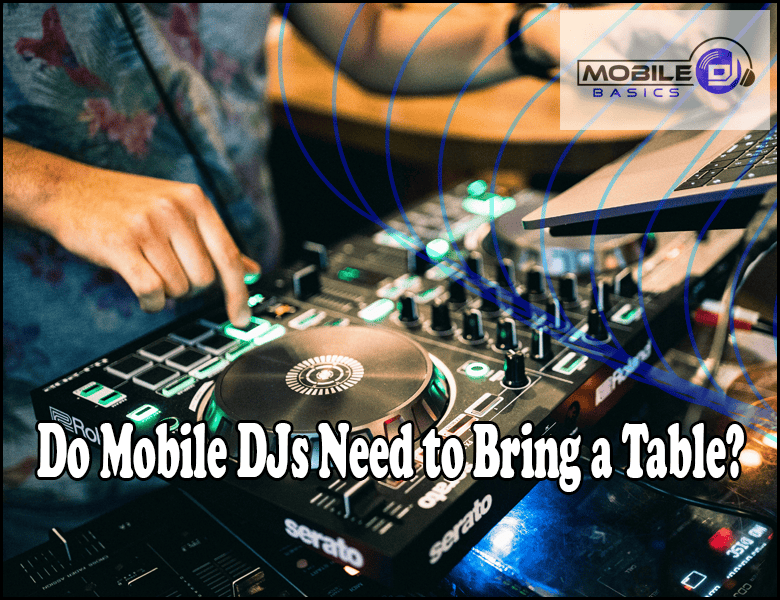
Do Mobile DJs Need To Bring A Table is a question that comes up constantly when starting out in mobile DJing. The answer depends on your venue, setup requirements, and the level of professionalism you want to project.
Most successful mobile DJs bring their own table because it gives them complete control over their setup and eliminates dependence on venue furniture. Having your own table means you can position your gear exactly where you need it and ensure proper height and stability for mixing.
TL;DR
- Professional DJ tables cost $150-$400 and pay for themselves in 2-3 gigs through increased booking confidence.
- Standard DJ table height ranges from 28-32 inches, matching most club and venue setups.
- Portable folding DJ tables weigh 25-35 pounds and set up in under 3 minutes.
- Venue-provided tables fail 30% of the time due to wrong height, instability, or unavailability.
Do Mobile DJs Need To Bring A Table
Yes, mobile DJs should bring their own table for consistent performance quality and professional presentation. Relying on venue tables creates unnecessary risk and limits your setup options.
When you bring your own table, you guarantee the proper height for comfortable mixing and crowd interaction. How high should a DJ table be becomes irrelevant when you control this variable yourself.
Why Venue Tables Often Fail DJs
Venue tables present multiple problems that can derail your performance. Most restaurant and event hall tables sit too low at 24-26 inches, forcing you to hunch over your equipment.
Standard banquet tables lack the stability needed for DJ equipment. The vibration from bass frequencies can cause equipment to shift or bounce, affecting your mix quality and potentially damaging gear.
- Wrong height – forces poor posture and reduces mixing accuracy
- Insufficient stability – equipment bounces with heavy bass
- Poor positioning – limited placement options in the room
- Unavailable – venues sometimes don’t have suitable tables
- Unpredictable size – may not accommodate your full setup
Professional DJ Table Benefits
Purpose-built DJ tables solve the problems that venue furniture creates. These tables provide the exact height and stability your equipment needs for optimal performance.
Professional tables include cable management features that keep your setup clean and safe. Built-in cord routing prevents tripping hazards and creates a more polished appearance for clients.
Height and Ergonomics
DJ tables typically measure 28-32 inches high, matching industry standards for comfortable mixing. This height lets you stand naturally while accessing all controls without strain.
The proper height also improves crowd interaction since you’re not hidden behind low furniture. Clients notice when DJs look professional and commanding rather than hunched over inadequate tables.
Stability and Vibration Resistance
Professional DJ tables feature heavy-duty construction that resists vibration from powerful sound systems. Reinforced legs and cross-bracing prevent equipment movement during bass-heavy tracks.
This stability protects expensive gear from damage caused by movement and vibration. What is a DJ controller becomes academic if vibrations damage your primary mixing device.
Portable DJ Table Options
Modern portable DJ tables balance professional features with mobility needs. Most quality options weigh 25-35 pounds and fold for easy transport in standard vehicles.
Look for tables with adjustable height settings to accommodate different venues and personal preferences. Quick-release mechanisms let you set up in minutes without tools.
Folding DJ Tables
Folding tables offer the best compromise between portability and functionality. These tables collapse to 4-6 inches thick for storage in car trunks or equipment cases.
Quality folding tables support 100-150 pounds of equipment weight. This capacity handles most mobile DJ setups including DJ mixers, controllers, and laptop computers.
Multi-Level Platforms
Advanced portable tables feature multiple tiers for organizing equipment by function. The main surface holds your mixer and controller while raised sections accommodate laptops and lighting controls.
These multi-level designs improve workflow by grouping related equipment together. You spend less time reaching across your setup and more time focusing on the crowd.
Setup Speed Matters
Choose tables that set up in under 5 minutes without tools. Clients judge your professionalism partly on how smoothly you handle setup and breakdown.
When You Might Skip the Table
Some specific situations make bringing your own table impractical or unnecessary. High-end venues with built-in DJ booths provide proper equipment platforms.
Wedding venues with permanent DJ stations eliminate the need for portable tables. These fixed installations often include cable management and proper height already.
Built-in DJ Booths
Upscale clubs and event centers feature permanent DJ booths with integrated equipment surfaces. These installations provide ideal height and often include lighting and ventilation systems.
Before skipping your table, confirm the booth dimensions accommodate your specific equipment layout. Some fixed installations work better with certain gear configurations than others.
Outdoor Events with Staging
Large outdoor events often provide elevated staging with equipment tables included. Festival and concert promoters typically supply professional-grade platforms as part of the venue package.
Verify table specifications in advance since outdoor staging varies widely in quality and design. Having your portable table as backup ensures you’re covered if provided equipment fails.
Cost Considerations
Professional portable DJ tables range from $150-400 depending on features and build quality. This investment typically pays for itself within 2-3 gigs through increased booking confidence.
Budget options under $200 work for occasional DJs but may lack durability for frequent use. Professional mobile DJs benefit from investing in higher-quality tables that withstand regular transport and setup.
- Entry level ($150-250) – basic folding tables for occasional use
- Professional ($250-350) – reinforced construction with adjustable height
- Premium ($350-400) – multi-level platforms with advanced features
Frequently Asked Questions
Can I use a regular folding table for DJing?
Regular folding tables work in emergencies but lack the height and stability needed for professional DJing. They typically sit too low and vibrate with heavy bass.
How much weight can portable DJ tables hold?
Quality portable DJ tables support 100-150 pounds of equipment weight. This capacity handles most mobile setups including mixers, controllers, laptops, and accessories.
Do I need a table for controller-only setups?
Yes, even minimal controller setups benefit from proper table height and stability. Controllers need stable surfaces for accurate mixing and professional appearance.
What table height works best for mobile DJs?
Most mobile DJs prefer tables between 28-32 inches high for comfortable standing operation. This height matches industry standards and improves crowd interaction.
Are expensive DJ tables worth the investment?
Professional-grade tables justify their cost through durability and features that improve performance quality. They typically pay for themselves within 2-3 gigs through increased booking success.
Final Thoughts
Do Mobile DJs Need To Bring A Table comes down to professionalism and performance consistency. Having your own table eliminates variables that can negatively impact your gigs.
Start with a quality folding table in the $200-300 range and upgrade as your business grows. DJ gear for beginners should always include a reliable table since it affects every other piece of equipment you use.
Subscribe to Our Newsletter

From discovering new songs to getting more gigs, I’m excited to share the wealth of knowledge I’ve gained through many years of DJing. [email protected]